
 British Deaf Association awards Sign Language Charter to Greater London Authority
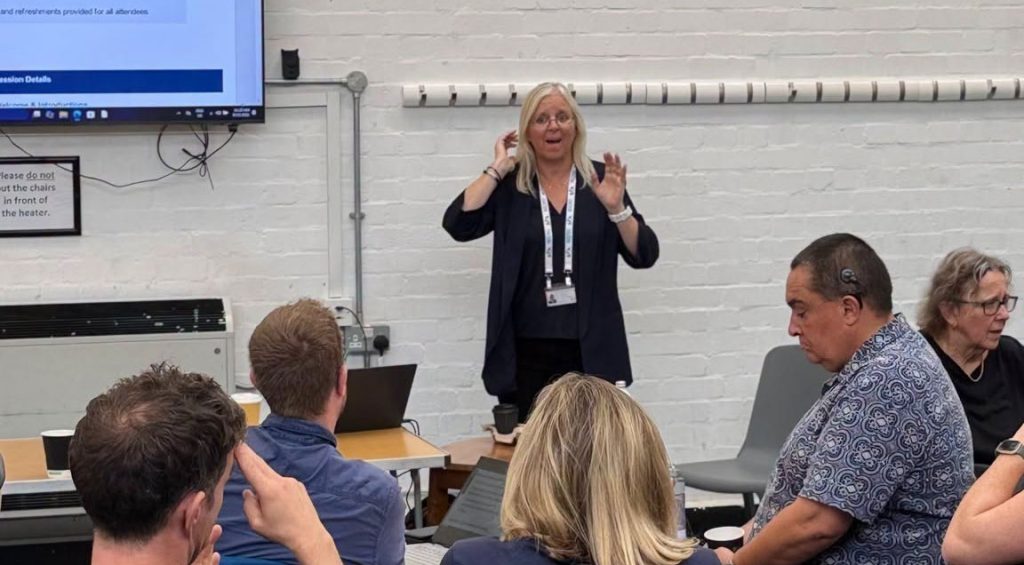
The British Deaf Association has awarded its Sign Language Charter to the Greater London Authority (GLA), recognising the…
23 September 2026
British Deaf Association awards Sign Language Charter to Greater London Authority
The British Deaf Association has awarded its Sign Language Charter to the Greater London Authority (GLA), recognising the…
23 September 2026



Policy sections
Introduction
The British Deaf Association (BDA) is committed to preventing acts of modern slavery and human trafficking from occurring within its organisation, supply chains, and all areas of its work and activities.
“Modern slavery” is a term which covers slavery (where ownership is exercised over a person); servitude (which involves the obligation to provide services imposed by coercion); forced or compulsory labour (which involves work or service exacted from any person under the menace of a penalty and for which the person has not offered himself voluntarily); and human trafficking (which concerns arranging or facilitating the travel of another with a view to exploiting them, even where the person consents to the travel).
We will ensure that we will comply with the Modern Slavery Act 2015 and are putting strict measures in place to ensure that modern slavery is not part of any of our business operations. This includes our supply chains, goods and services. This statement sets out the steps we are taking to continually develop our procedures and to check our compliance.
The BDA has a staff base of around 30-40 employees and a small number of volunteers and trustees. The BDA does not make or supply any tangible goods other than various service across the UK to support Deaf signers across the UK, and to raise awareness of sign language to hearing people and organisations providing services across the UK (England, Scotland, Northern Ireland and Wales).
Our supply chain includes procurement of IT services, specialist services such as legal and HR services.
As a small UK-based charity providing training, consultancy and support services, we consider the risk of modern slavery within our direct operations to be low. Our workforce is UK-based and engaged in professional service delivery, with no manufacturing activities or complex production supply chains. However, we recognise that modern slavery risks can still exist within our wider supply chain, particularly in relation to outsourced services, recruitment agencies, temporary or agency workers, facilities management, cleaning, technology procurement and the purchase of promotional goods.
Where third-party agencies supply temporary staff, the BDA will conduct due diligence to ensure agencies comply with UK employment law and verify workers’ right to work.
We are committed to preventing modern slavery and human trafficking in all aspects of our work and expect the same standards from our suppliers, contractors and partners. We seek to work with reputable organisations that demonstrate ethical employment practices and compliance with relevant employment legislation. Through proportionate due diligence, procurement processes and ongoing supplier relationships, we aim to identify and mitigate any potential risks of labour exploitation and ensure that all workers connected with our operations are treated fairly, with dignity and respect.
Supporting documentation and related policies are cross-referenced where relevant to ensure a consistent and coordinated approach across the organisation.
This statement covers our financial year ending April 2026.
BDA's vision is “Deaf people fully participating and contributing as equal and valued citizens in the wider society”.
BDA's mission is to ensure a world in which the language, culture, community, diversity and heritage of Deaf people in England, Scotland, Wales and Northern Ireland is respected and fully protected, ensuring that Deaf people can participate and contribute as equal and valued citizens in the wider society.
The BDA recognises that modern slavery is a serious criminal offence and a violation of fundamental human rights. Modern slavery takes many forms, including slavery, servitude, forced or compulsory labour, and human trafficking, all of which involve the deprivation of a person's liberty for personal or commercial gain.
BDA has a zero-tolerance approach to modern slavery and is committed to acting ethically, transparently, and with integrity in all business dealings and relationships.
1.1 Purpose
The purpose of this policy is to:
- Prevent modern slavery and human trafficking within BDA's activities.
- Ensure compliance with the Modern Slavery Act 2015.
- Promote ethical and responsible business practices.
- Protect employees, volunteers, contractors, service users, and all individuals connected with the organisation.
- Establish procedures for reporting and addressing concerns.
1.2 Scope
This policy applies to:
- Trustees.
- Employees.
- Volunteers.
- Agency workers.
- Contractors and consultants.
- Suppliers and service providers.
- Any individual acting on behalf of BDA.
Principles
This Anti-Slavery and Human Trafficking Policy is based on the following principles:
- The BDA will not knowingly support or engage with organisations involved in modern slavery or human trafficking.
- The BDA expects all staff, volunteers and representatives to uphold the highest standards of ethical conduct.
- The BDA will take reasonable steps to assess and manage modern slavery risks in its operations and supply chains.
- The BDA will provide awareness and training where appropriate to ensure understanding of modern slavery risks.
- The BDA will investigate concerns promptly and confidentially.
- The BDA will cooperate with relevant authorities where criminal activity is suspected.
Practice Guidelines
3.1 Responsibilities
3.1.1The Board of Trustees has overall responsibility for ensuring that this policy complies with legal and ethical obligations.
3.1.2Senior Management Team members are responsible for implementing this policy and ensuring appropriate procedures are followed within their areas of responsibility.
3.1.3Employees and volunteers are responsible for:
- Reading and understanding this policy.
- Remaining vigilant to indicators of modern slavery.
- Reporting any concerns without delay.
- Cooperating with any investigation.
3.2 Recruitment
3.2.1The BDA will maintain fair and lawful recruitment practices and will undertake appropriate checks to confirm an individual's right to work in the United Kingdom where required.
3.2.2The BDA will not knowingly employ any individual who is subject to forced labour, human trafficking, or exploitation.
3.2.3All employees and volunteers will be treated fairly and with dignity and respect.
3.3 Supply Chains and Procurement
3.3.1The BDA expects suppliers, contractors and partners to operate in compliance with all applicable employment laws and anti-slavery legislation.
3.3.2Where appropriate, suppliers may be required to confirm that they have measures in place to prevent modern slavery and human trafficking within their operations and supply chains.
3.3.3The BDA reserves the right to terminate relationships with suppliers, contractors or partners where evidence of modern slavery or human trafficking is identified.
3.4 Identifying Risk
3.4.1Staff and volunteers should be alert to warning signs that may indicate modern slavery, including:
- Individuals appearing fearful, withdrawn or controlled by another person.
- Lack of personal identification documents.
- Restrictions on freedom of movement.
- Unusual working conditions.
- Evidence of exploitation, coercion or abuse.
- The organisation will undertake an annual modern slavery risk assessment to identify, assess and monitor potential risks within its operations and supply chain. Risks will be evaluated using a proportionate risk-based approach that considers factors such as supplier type, geographic location, sector, nature of services provided, contract value and level of organisational dependency. Suppliers and activities will be assigned a risk rating (for example, Low, Medium or High, or using a Red/Amber/Green status) and reviewed periodically to ensure controls remain effective. Risk assessments may be informed through supplier self-certification, due diligence questionnaires, publicly available information, declarations of compliance and, where appropriate, targeted audits or requests for additional evidence.
- All new suppliers will be subject to an appropriate onboarding and vetting process, including checks on legal compliance, employment practices and, where relevant, modern slavery controls. Contracts may include clauses requiring compliance with the Modern Slavery Act 2015 and the organisation’s ethical standards. Higher-risk suppliers may be subject to enhanced due diligence, periodic reviews or audit activity. Where concerns or indicators of modern slavery are identified, these will be escalated to the appropriate manager for investigation and risk assessment. The organisation reserves the right to seek remedial action, require corrective improvement plans, suspend engagement or terminate contractual relationships where suppliers fail to address identified risks or comply with required standards.
- The organisation will establish and monitor appropriate key performance indicators (KPIs) and measurable objectives to assess the effectiveness of its modern slavery controls. These may include the number of suppliers subject to due diligence or audit, the percentage of relevant contracts containing modern slavery clauses, the number of staff and suppliers receiving awareness training, the number of concerns raised or investigated, and the completion of any corrective actions identified through monitoring and review activities.
3.4.2Any concerns should be reported immediately through the procedures outlined in this policy.
3.5 Reporting Concerns
3.5.1Anyone who suspects modern slavery or human trafficking is taking place within BDA activities or supply chains must report their concerns to their line manager, Head of Department, Chief Executive officer, or another appropriate member of management.
Concerns relating to modern slavery may also be reported under the BDA’s Whistleblowing Policy, which provides additional protections for staff raising concerns in good faith.
3.5.2All reports will be treated seriously, sensitively and, wherever possible, confidentially.
3.5.3Individuals raising concerns in good faith will not suffer retaliation, victimisation or detrimental treatment.
3.5.4The organisation will review this policy at least annually and, where required by legislation or governance arrangements, obtain approval from the Board or equivalent governing body. Any applicable modern slavery statements will be published and updated in accordance with relevant legal requirements, reflecting the organisation’s ongoing commitment to preventing modern slavery and human trafficking within its operations and supply chains.
3.6 Investigations
3.6.1The BDA will investigate all reported concerns appropriately and proportionately.
3.6.2Where evidence indicates that a criminal offence may have occurred, the BDA may refer the matter to relevant law enforcement agencies and other statutory authorities.
3.6.3Records relating to allegations, investigations and outcomes will be maintained securely in accordance with data protection requirements.
All investigations and records will be handled in accordance with the Data Protection Act 2018 and the BDA’s Data Protection Policy.
3.6.4Where information relating to modern slavery compliance, investigations, due diligence activities or supplier compliance is requested by an authorised regulator, funder, commissioner or statutory body, the BDA will endeavour to provide an appropriate report within 10 working days of receiving the request, subject to legal, confidentiality and data protection obligations.
3.7 Training and Awareness
3.7.1Appropriate staff and volunteers will receive information and guidance regarding:
- The nature of modern slavery and human trafficking.
- How to recognise potential indicators.
- How concerns should be reported.
- The organisation's responsibilities under the Modern Slavery Act 2015.
3.7.2The organisation will ensure that all employees, volunteers and others identified as having responsibilities relating to procurement, supplier management, recruitment or safeguarding receive appropriate modern slavery awareness training. Training requirements, frequency and delivery methods will be determined according to role and risk, and records of completion will be maintained and monitored. Relevant individuals may be required to provide documented confirmation of training completion to support compliance and assurance activities.
3.8 Breaches of this Policy
3.8.1Any employee found to have breached this policy may be subject to disciplinary action up to and including dismissal.
3.8.2Any volunteer found to have breached this policy may be excluded from volunteering activities.
3.8.3Any contractor, consultant, partner or supplier found to have breached this policy may have their agreement terminated.
Policy Owner
This policy is owned by the Board of Trustees and maintained by the Chief Executive Officer.
Policy Review Date
Date Last Reviewed: July 2026
Review Frequency: Every two years or sooner if there are significant changes in legislation, regulatory requirements, or organisational practice.
Next Review Due: July 2028.