
 World Alzheimer’s Month: Deaf carers share their experiences in BSL
Explore six BSL videos featuring Deaf carers sharing their experiences of supporting loved ones living with dementia.
14 September 2026
World Alzheimer’s Month: Deaf carers share their experiences in BSL
Explore six BSL videos featuring Deaf carers sharing their experiences of supporting loved ones living with dementia.
14 September 2026

You’ll Never Walk Alone
— in British Sign Language
For 135 years, Deaf signers have led, fought, and celebrated their language and culture together. Now, one of football’s most iconic anthems is brought to life in BSL.
Because strength comes from community.
And none of us should ever walk alone.
Behind the signs
British Sign Language (BSL) is a visual–spatial language, not a signed form of English. Meaning in BSL is created through the relationship between handshape, movement, location, orientation, facial expression, body posture, and the use of space. These elements work together simultaneously, rather than sequentially, to convey meaning.
As a result, effective translation into BSL requires a fundamentally different approach from word-for-word substitution.
This is particularly true for sign songs, where language, rhythm, emotion, and visual storytelling must align. In sign-song interpretation, the priority is not the surface structure of the lyrics, but the conceptual and emotional meaning beneath them. A successful sign song asks not “What is the English word?” but “What is being expressed, and how is that meaning shown visually in BSL?”
Regional Language: Liverpool BSL Accent
BSL, like all living languages, has regional variation. Vocabulary, movement, and style differ across the UK, reflecting local Deaf communities and histories. For You’ll Never Walk Alone, it was essential that the signed version reflected Liverpool Deaf identity, rather than imposing a standardised or neutralised form of BSL.
This is why local variants — such as the regional BSL sign NEVER — were deliberately retained. These choices anchor the song in place and community, reinforcing that this is not an abstract or generic translation, but one rooted in the lived language of Deaf people from Liverpool.

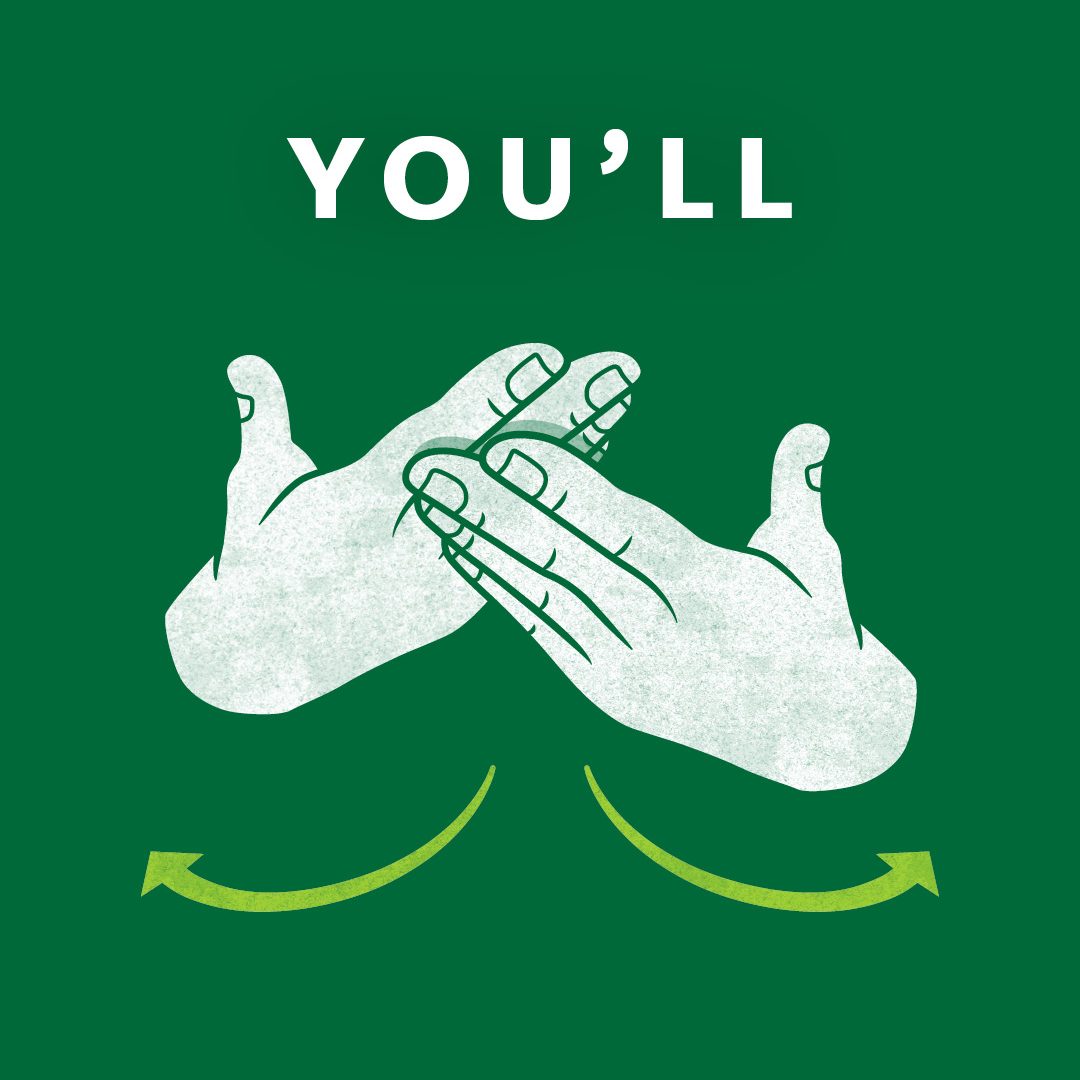
YOU’LL — Addressing the Community
This sign is designed to address the entire crowd, not an individual.
The BSL sign YOU is a pointing gesture that directly addresses the audience. It can be used to refer to a single person, with a direct pointing movement, or it can refer to several people if used with a sweeping movement.
In this song, the intention is not individual instruction, but collective address — “all of you, all of us, together”. Using an open hand instead of a pointing gesture adds a sense of inclusion, of offering the song to everyone in the crowd.
This creates a dramatic moment of solidarity — visually saying we are all being spoken to. As the original song says, you as an individual will not be alone because others will be there to share with you.
Presented in this way, with an open handshape, the image alludes to other BSL signs about giving and sharing, and suggests an offer by the signer to be there for others.
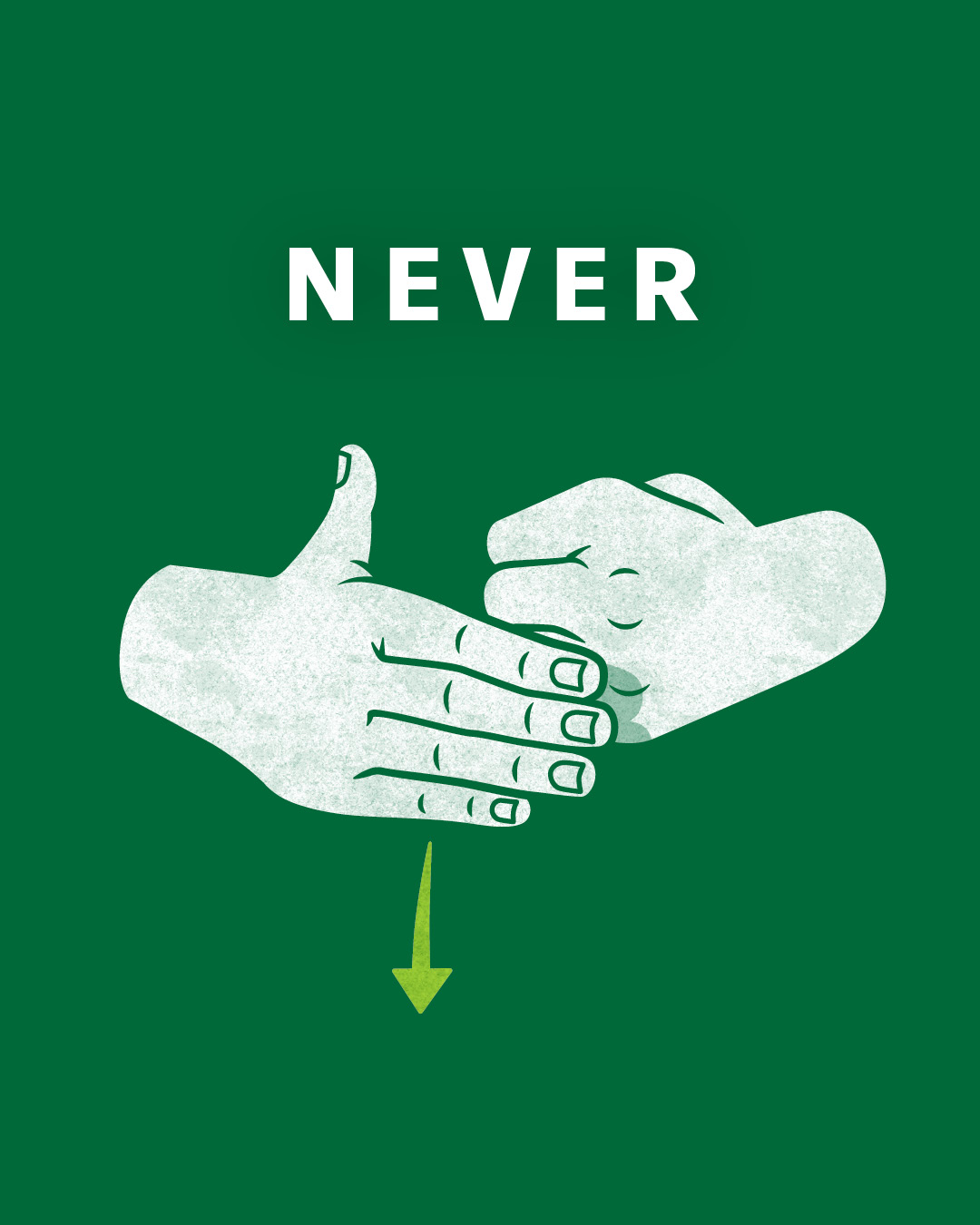
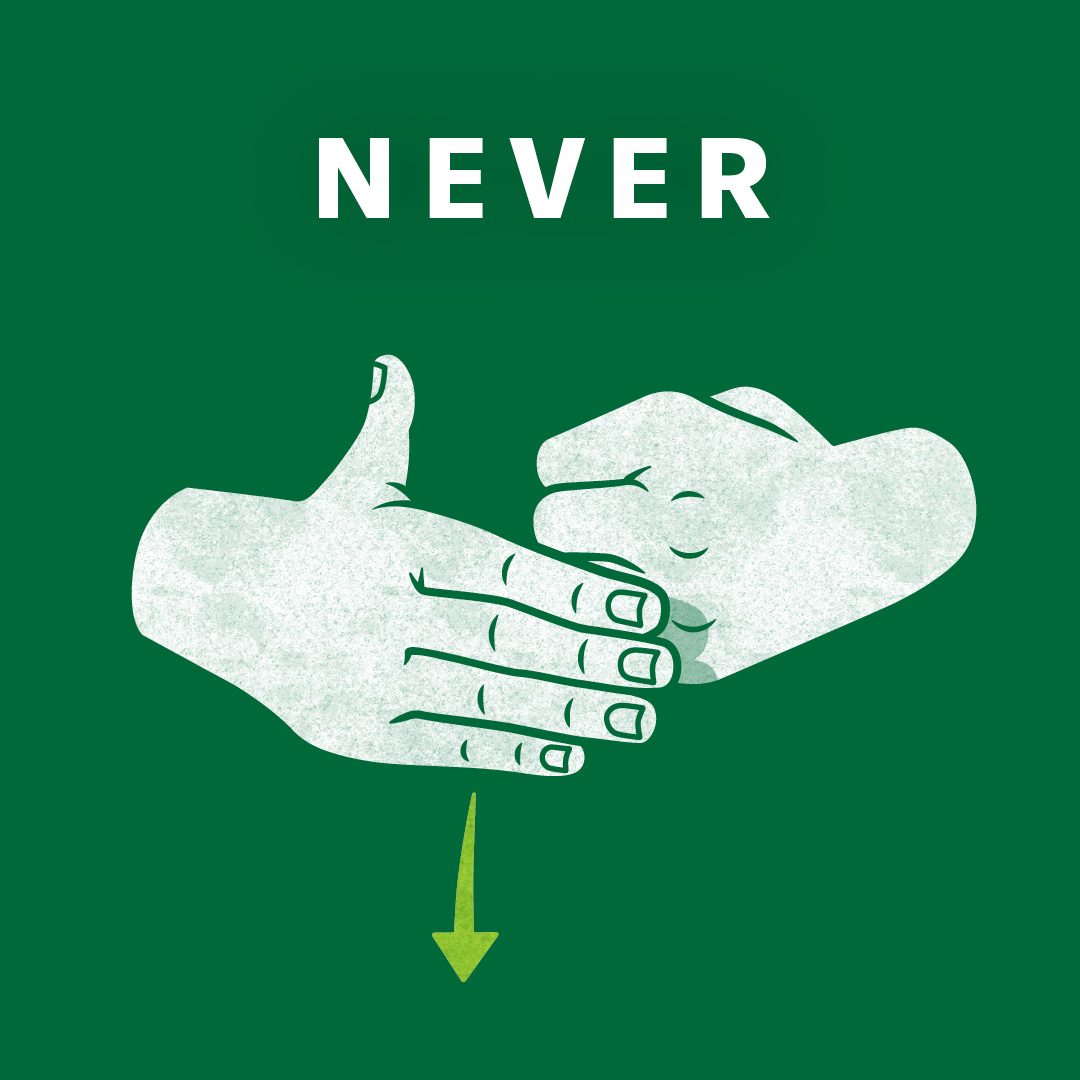
NEVER — Local Language, Local Identity
The sign used is the regional BSL variant of the sign ‘never’, grounding the song in local Deaf expression.
Retaining this regional sign reinforces place, identity, and authenticity, rather than defaulting to a generic or standardised form.

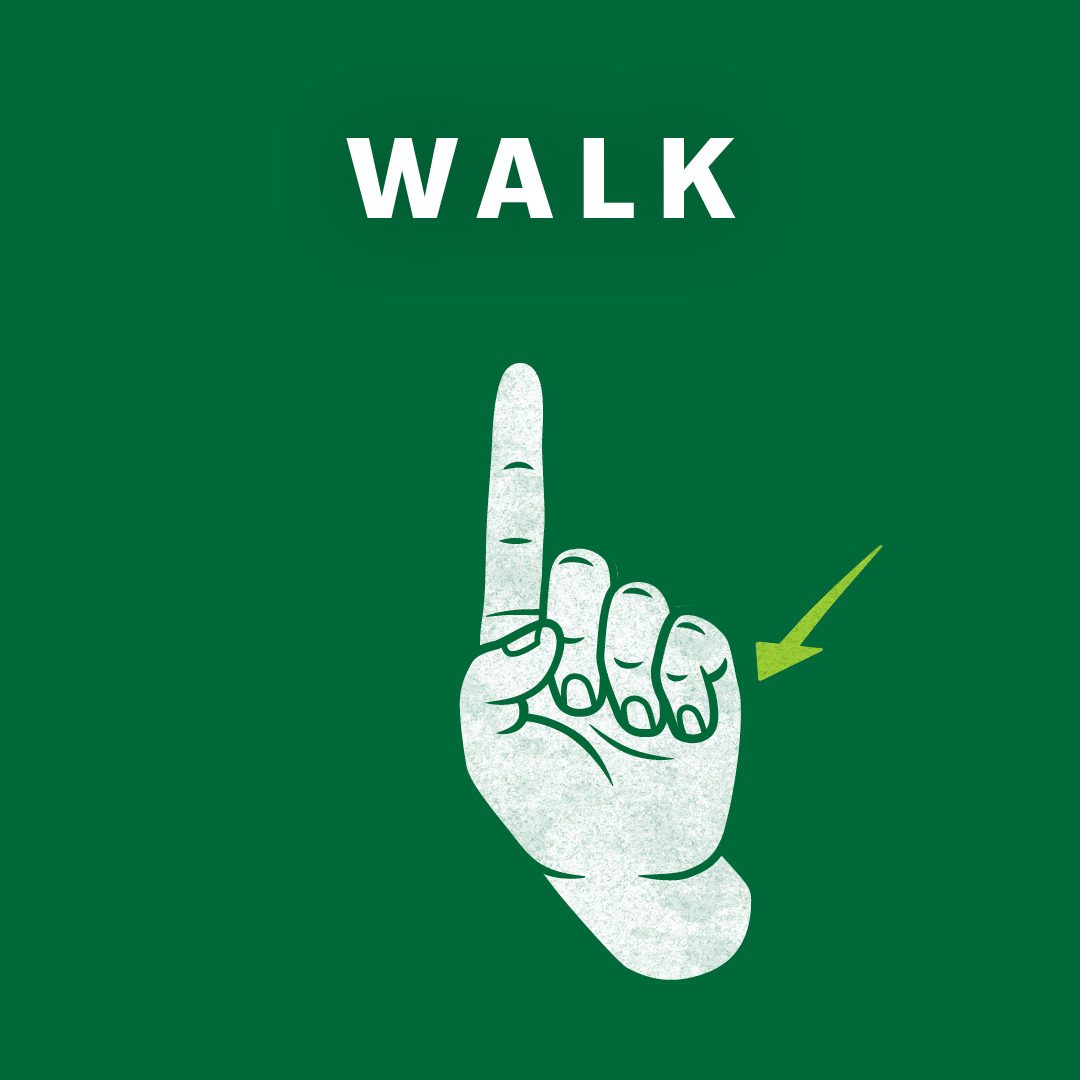
WALK — Vulnerability and Separation
Instead of a literal “walking” sign, this handshape represents a single person moving away, symbolising isolation and vulnerability. The movement away from the body sets up the emotional contrast that follows.
Linguistic approach: person classifier
In everyday BSL, walk can be shown using two fingers “walking” on the palm. In this song, the meaning is not literal walking, but being alone and vulnerable.
The chosen handshape uses:
- a single index finger representing one person,
- moving away from the signer’s body, indicating isolation or solitude.
The addition of forward-moving arrows clarifies the conceptual movement into empty space — visually setting up the emotional contrast needed for the next sign.
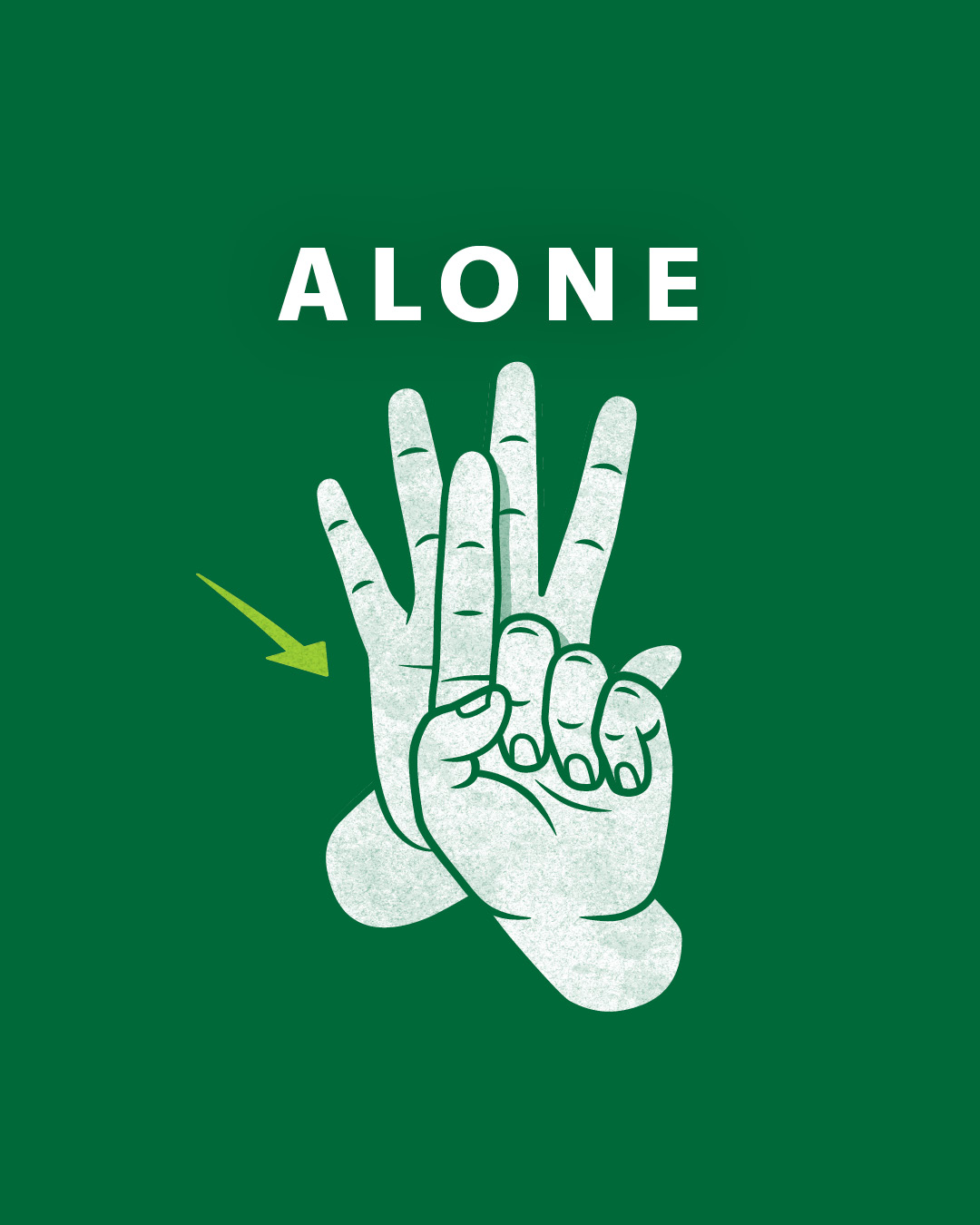

ALONE — From Isolation to Togetherness
This sign intentionally resolves the previous movement. The single person is joined by others, visually transforming isolation into solidarity and community. It reflects the core message of the song: no one is left behind.
Linguistic approach: use of productive lexicon
This sign intentionally resolves the previous movement.
- The single “person” handshape is joined by multiple fingers, showing others coming alongside in support of the lone figure.
- Linguistically, this shifts from isolation to solidarity, using space and number to express meaning.
- Directional arrows mirror those in WALK, reinforcing visual rhythm and narrative continuity.
The result is a clear visual message: no longer alone — together.