
 British Deaf Association awards Sign Language Charter to Greater London Authority
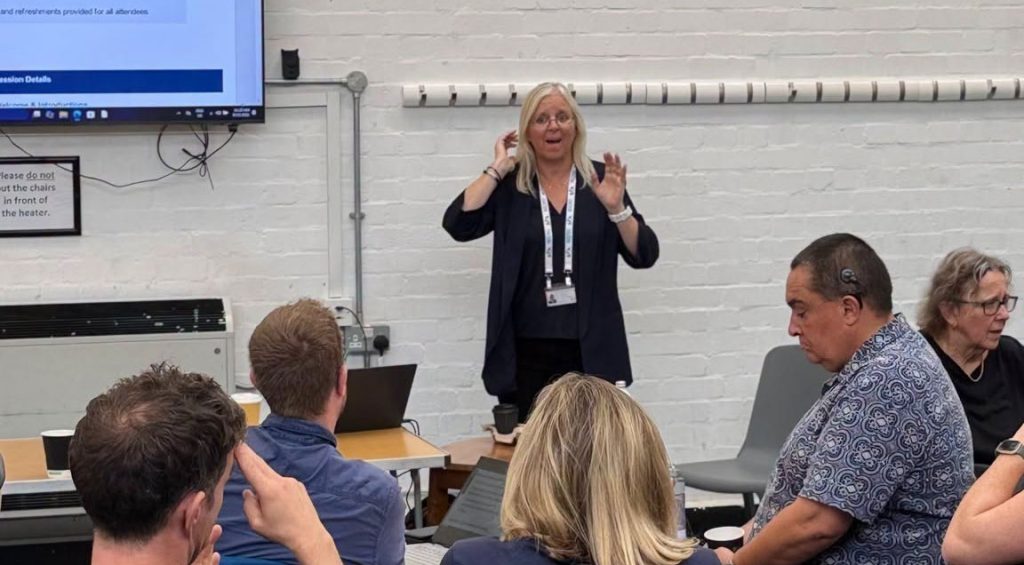
The British Deaf Association has awarded its Sign Language Charter to the Greater London Authority (GLA), recognising the…
23 September 2026
British Deaf Association awards Sign Language Charter to Greater London Authority
The British Deaf Association has awarded its Sign Language Charter to the Greater London Authority (GLA), recognising the…
23 September 2026
BDA Scotland · Research
Completed · February 2021–March 2022
Deaf people with dementia and care homes in Scotland
Research into effective care-home provision for Deaf BSL users living with dementia, viewed from Deaf community and care-provider perspectives.

Executive summary in BSL
About the research
The project was led by BDA Scotland in partnership with Social Research with Deaf People at the University of Manchester and funded by the Life Changes Trust.
Deaf researchers collected data in BSL through interviews and focus groups. The work explored how care homes could better meet the language, cultural, social and care needs of Deaf people living with dementia.
Project scope
Care-home and Deaf community perspectives
12Scottish care homes took part across two studies
2Deaf community focus groups explored care and communication
BSLData was collected by Deaf researchers through BSL
2022The final report and recommendations were published
What the research found
Language, culture and connection matter
The executive summary identified different priorities and perspectives between Deaf participants and care-home staff.
Protect BSL
Regular, meaningful communication in BSL helps residents maintain their language. Deaf participants saw preventing BSL decline as a central priority.
Understand Deaf culture
General deaf awareness does not replace BSL and Deaf cultural understanding. Care-home teams need better support to recognise culturally specific needs.
Prevent isolation
Contact with Deaf BSL users, family and community helps residents maintain social connection. Accessible information and interpreters are also essential during decisions and transition.
Recommendations
What could improve care
The report sets out detailed recommendations and timescales. Its suggested actions include:
- Train and employ Deaf BSL cultural advocates.
- Improve BSL and Deaf cultural training for care providers.
- Create and implement best-care guidelines with specialist organisations.
- Train Deaf befrienders in dementia and support culturally Deaf-friendly activities.
- Employ Deaf BSL staff and provide practical care-home communication guides.
- Provide accessible BSL information about care-home choices and decision making.
- Strengthen inspection protocols for culturally Deaf BSL users.
Published March 2022
Read the research reports
Choose the shorter executive summary or the complete report. The BSL executive summary is available above.
Research approach
How the project worked
Study one: care homes with experience
Six care homes that had, or previously had, Deaf residents with dementia took part. Researchers interviewed managers and keyworkers about the services they provided.
Study two: care homes without experience
Managers from six further care homes discussed existing preparation and what they would consider important when supporting a future Deaf resident with dementia.
Two Deaf community focus groups
One group brought together Deaf BSL users with caring experience. A second explored wider Deaf community expectations of residential, day and respite care.
BSL-led remote research
Deaf researchers collected all data remotely through Zoom during the COVID-19 pandemic. Interviews and focus groups were conducted in BSL, with BSL–English interpreters available for hearing care-home staff.
Research contact: avril.hepner@bda.org.uk
This project was funded by the Life Changes Trust.