

British Deaf Association
  • About us
        • About the BDA

          Deaf-led. Community focused.

          Learn more about who we are, what we stand for and how the British Deaf Association is led.

        • Who we are

          Learn about our purpose, values and the direction that guides the BDA.

        • Who we are
          • What we stand for
          • BDA Manifesto
          • Our Work
          • Strategic Vision
        • Leadership & governance

          Meet the people who lead the BDA and see how our organisation is governed and accountable.

        • Leadership & governance
          • Board
          • Management Team
          • Annual Reviews
        • History & community

          Explore the BDA's history and our work with Deaf young people.

        • History & community
          • History
          • BDA Youth
  • What we do
        • What we do

          Our work across the UK

          We campaign for equality, champion BSL and deliver projects and services that support Deaf people and communities across the UK.

        • Campaigns, policy and evidence

          We campaign for change and use evidence to improve the rights of Deaf people.

          • Our campaigns
          • Research and consultations
        • Support, projects and programmes

          Find support and explore BDA work taking place across the UK.

          • Advocacy
          • Projects and programmes
        • Information and resources

          Browse trusted BSL information, guidance and resources on topics that matter to Deaf people.

          • BSL and Deaf culture
          • Health and wellbeing
          • History and heritage
        • Celebrating BSL and Deaf culture

          Explore annual initiatives and celebrations that bring our community together.

          • Sign Language Week
          • National BSL Day
          • International Week of Deaf People
          • BSL Poet Laureate
  • News & events
        • Latest news

          Take the Leap for BDA Youth: Skydive Fundraiser 2026 Members of the BDA Youth Committee, BDA staff and supporters are taking to the skies to raise funds… 31 July 2026
          BDA responds to PM’s social care announcement The BDA welcomes the focus on social care and hopes the upcoming Big Conversation on Care will meaningfully… 30 July 2026
          Join our Deafblind Advisory Group The British Deaf Association (BDA) is looking for Deafblind people from across the United Kingdom to help shape… 25 June 2026

          All news →

        • Explore

          More news, organisations and places to discover.

          • British Deaf News
          • World Federation of the Deaf
          • European Union of the Deaf
          • SHARE: The Deaf Visual Archive
          • Sign Language Week
  • Get involved
        • Support us

          Help make a difference

          Support the BDA through donations, fundraising and other ways to give.

          Make a difference Make a donation and help support the BDA’s work with Deaf people and communities across the UK. Fundraise for the BDA Take on a challenge or organise your own fundraiser to help raise money for the BDA.
        • More ways to support
          • In-Memoriam Donations
          • Gifts in Wills
          • How we fundraise
        • Join us

          Work with us or become part of the BDA community.

          Current Job Opportunities See current vacancies and opportunities to work with the BDA. → Become a Member Join the BDA and be part of our community. →

          Stay connected

          Keep up with BDA news, campaigns and opportunities.

          Newsletter Sign up for BDA news, campaigns and important updates. →
  • Training & Consultancy
  • Contact
        • Get in touch

          How can we help?

          For general enquiries, use our online contact form and we’ll help make sure your message reaches the right BDA team.

          Contact us Send us a message using our online form. →
        • Follow us
          • X
          • Facebook
          • Facebook – British Deaf News
          • Instagram
          • LinkedIn
          • YouTube
        • Our offices

          Find your local BDA team

          Find contact details for BDA offices and teams across the UK.

          Head Office London → England Derby → Northern Ireland Belfast → Scotland Glasgow → Wales Cardiff → Deaf Museum Manchester →
  • Membership
  • Safeguarding
  • Donate
    • About us
          • About the BDA

            Deaf-led. Community focused.

            Learn more about who we are, what we stand for and how the British Deaf Association is led.

          • Who we are

            Learn about our purpose, values and the direction that guides the BDA.

          • Who we are
            • What we stand for
            • BDA Manifesto
            • Our Work
            • Strategic Vision
          • Leadership & governance

            Meet the people who lead the BDA and see how our organisation is governed and accountable.

          • Leadership & governance
            • Board
            • Management Team
            • Annual Reviews
          • History & community

            Explore the BDA's history and our work with Deaf young people.

          • History & community
            • History
            • BDA Youth
    • What we do
          • What we do

            Our work across the UK

            We campaign for equality, champion BSL and deliver projects and services that support Deaf people and communities across the UK.

          • Campaigns, policy and evidence

            We campaign for change and use evidence to improve the rights of Deaf people.

            • Our campaigns
            • Research and consultations
          • Support, projects and programmes

            Find support and explore BDA work taking place across the UK.

            • Advocacy
            • Projects and programmes
          • Information and resources

            Browse trusted BSL information, guidance and resources on topics that matter to Deaf people.

            • BSL and Deaf culture
            • Health and wellbeing
            • History and heritage
          • Celebrating BSL and Deaf culture

            Explore annual initiatives and celebrations that bring our community together.

            • Sign Language Week
            • National BSL Day
            • International Week of Deaf People
            • BSL Poet Laureate
    • News & events
          • Latest news

            Take the Leap for BDA Youth: Skydive Fundraiser 2026 Members of the BDA Youth Committee, BDA staff and supporters are taking to the skies to raise funds… 31 July 2026
            BDA responds to PM’s social care announcement The BDA welcomes the focus on social care and hopes the upcoming Big Conversation on Care will meaningfully… 30 July 2026
            Join our Deafblind Advisory Group The British Deaf Association (BDA) is looking for Deafblind people from across the United Kingdom to help shape… 25 June 2026

            All news →

          • Explore

            More news, organisations and places to discover.

            • British Deaf News
            • World Federation of the Deaf
            • European Union of the Deaf
            • SHARE: The Deaf Visual Archive
            • Sign Language Week
    • Get involved
          • Support us

            Help make a difference

            Support the BDA through donations, fundraising and other ways to give.

            Make a difference Make a donation and help support the BDA’s work with Deaf people and communities across the UK. Fundraise for the BDA Take on a challenge or organise your own fundraiser to help raise money for the BDA.
          • More ways to support
            • In-Memoriam Donations
            • Gifts in Wills
            • How we fundraise
          • Join us

            Work with us or become part of the BDA community.

            Current Job Opportunities See current vacancies and opportunities to work with the BDA. → Become a Member Join the BDA and be part of our community. →

            Stay connected

            Keep up with BDA news, campaigns and opportunities.

            Newsletter Sign up for BDA news, campaigns and important updates. →
    • Training & Consultancy
    • Contact
          • Get in touch

            How can we help?

            For general enquiries, use our online contact form and we’ll help make sure your message reaches the right BDA team.

            Contact us Send us a message using our online form. →
          • Follow us
            • X
            • Facebook
            • Facebook – British Deaf News
            • Instagram
            • LinkedIn
            • YouTube
          • Our offices

            Find your local BDA team

            Find contact details for BDA offices and teams across the UK.

            Head Office London → England Derby → Northern Ireland Belfast → Scotland Glasgow → Wales Cardiff → Deaf Museum Manchester →
    • Membership
    • Safeguarding
    • Donate

News

9th May 2019

Tips for Dementia Carers

For any person going through the experience of caring for someone with Dementia, it’s so important to share your experiences with others.

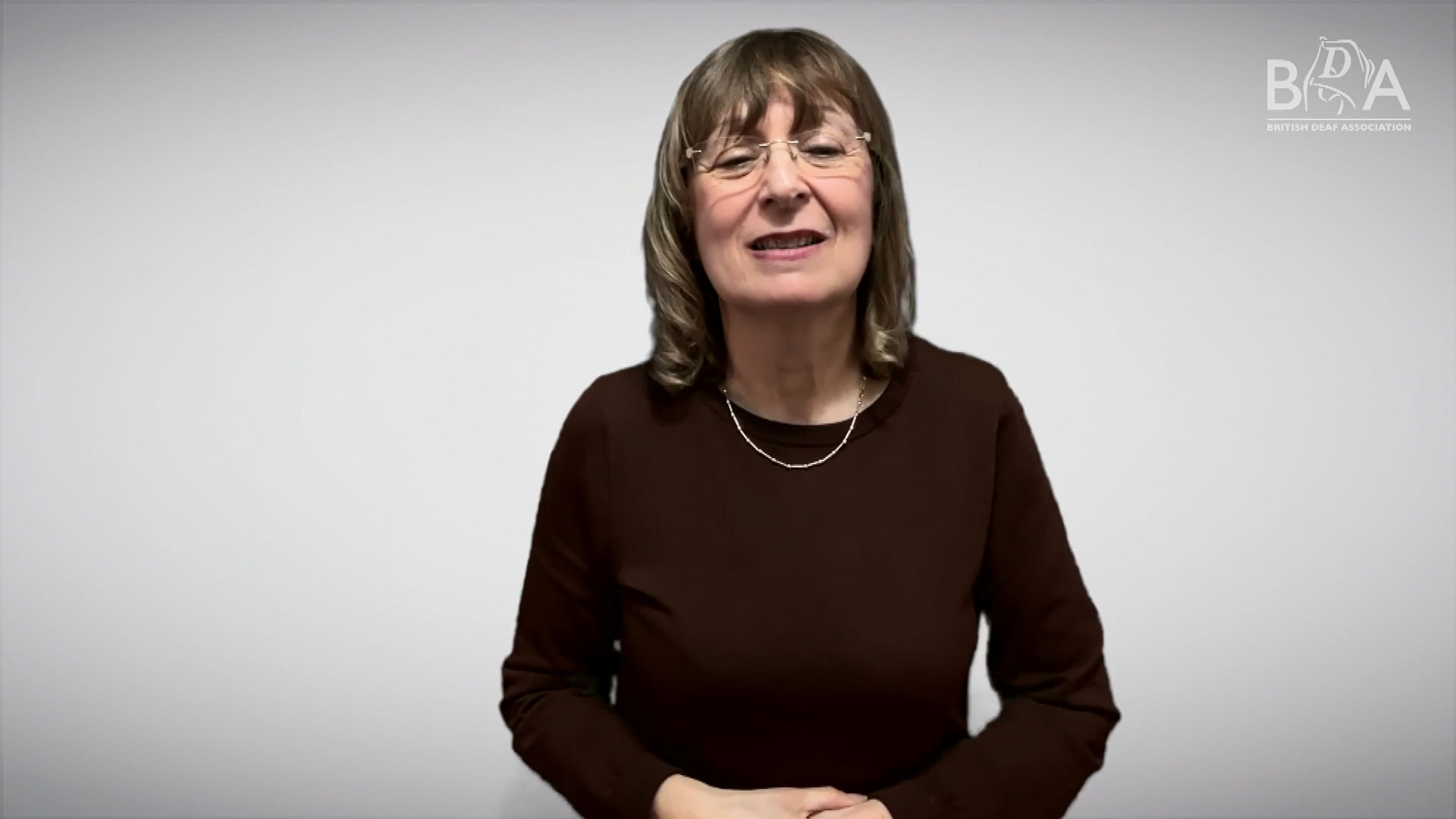
In today’s video, BDA Scotland’s Community Development Manager, Avril Hepner, chats to Carolyn Nabarro-Denmark about her experience of being a carer and the useful information she picked up along the way.

For more information on Dementia, head over to our dedicated Dementia page at bda.org.uk/dementia

An English transcript of the video is available below.

English Transcript

Avril: Hello. We are here today to talk about some tips for managing dementia. We going to share some ideas with you, but first I would like to introduce myself. I am Avril Hepner from the BDA Scotland.

Carolyn: And I am Carolyn from Swindon. I used to live in Bristol. I’m from England. I have lots of tips for you.

Avril: You’ve been through a lot Carolyn, so I’m hoping that you can pick out some key points for us.

Carolyn: Yes. I think the main thing I’d like to say first though is that for any person going through the experience of caring for someone with dementia, it’s so important to share your experiences with others. The deaf community is very small and often people just simply don’t know this stuff. I’ve had to care for two relatives with dementia and my top tip would be that within somebody’s home, their house or flat or whatever, when they start to forget where things are or start putting things in the wrong place, as is very common with dementia, one of the best thing you can do is to label things. So, for example in the kitchen, label the cupboard where you normally keep the plates and cups and saucers with a photograph of what the cupboard looks like inside. If you stick that to the outside of the cupboard door that helps the person with dementia know where to find things or where to put things. Do the same with the cutlery drawer, the fridge and so on. It’s really helpful. You can put one or two photos on each cupboard, but don’t put up too many, otherwise it will become confusing.

Avril: You could link this into a daily routine, for example breakfast, dinner, tea, as it helps them to know where to find food. Another idea might be to take the cupboard doors off and replace them with glass doors or see-through doors, so there are various options, right?

Carolyn: Yes, you could do that. Another strategy I used was to get a stacking unit for the kitchen worktop. I put it in the corner and stacked a couple of plates and bowls on it, in full view. I just put out one or two of each item on the unit, as this seems to work better. It can be a bit overwhelming to open a cupboard and see lots and lots of things inside it. So, the corner unit was helpful as a daily reminder of what things needed using and it made finding them easy.

Avril: So, you would keep a couple of plates and some knives and forks and cups in that corner? That’s another good option.

Carolyn: I also labelled the teabag and sugar containers with pictures so that made it easier to make tea. Little things like that can help a person to maintain their independence. That is important because it’s not good to sit around doing nothing. Another thing you can do is to label the doors of each room in the house, showing what the room is for. For example, my mum’s partner would constantly ask me where his bedroom was. He thought it was upstairs, but he lived in a flat. I realised that his mind was taking him back to previous places where he had lived and that it was difficult for him to remember, so I stuck a picture of the bedroom on the bedroom door so that he could see it and that would help him remember what the rooms were for. That helped him to feel safe in his own home.

Avril: That’s a good point because often all the doors in a house look the same when they are closed.

Carolyn: Exactly. They were all white in this case. Another good tip relates to the fact that people with dementia often love talking about the past, because it’s what they can remember more easily. So I would leave old photo albums out on the table or other memorabilia from the past. For example my mum’s partner had enjoyed playing badminton when he was younger and had lots of photographs and newspaper cuttings of Deaf badminton tournaments which I would leave out for him to look at. It can also be helpful to remind the person with dementia when things happened, what year. That can be important too. I actually bought a dementia clock which shows the day in large writing, the date and the time. I put it on top of the television. That seemed like a good place because people with dementia often enjoy spending a lot of time watching television. It was a regular visual reminder of the time for them. If it had been up on the wall somewhere they probably would have become confused.

Avril: You just mentioned leaving out old photos and things. This can be a good way for a person with dementia to pass the time, looking back and reminding themselves of things that happened in the past. It can also be a great conversation starter. Often when people visit, they struggle to know how best to talk to a person with dementia, but old photos can give them something to talk about.

Carolyn: Yes I agree. Also, we had issues with my mother’s partner constantly losing his hearing aid and false teeth. A strategy we used for dealing with this problem was to put a photograph on a hearing aid box in the bedroom, on the top of the chest of drawers. That serves as a reminder of where to put the hearing aid when he takes it off. We did this with his glasses and false teeth to, to save the carers having to search around everywhere to find things.

Avril: You’ve mentioned lots of things already, but another point I wanted to ask you about was about how you managed when you needed to go away and the person with dementia was left alone. How did you manage that?

Carolyn: Well, it was different with my mother because I was there with her all the time, but I’m caring for her partner with dementia now and I’m not able to be there with him all the time. He has carers coming in to help him who are very good, but I was still worried because I live a long way away from him (I was in Bristol at that time) so one thing that I set up to help ease my mind was to buy a cheap WebCam, maybe £40, and I put that in his home, linked to the Wi-Fi. I was then able to check on my phone or iPad via the app to see how he was and whether he was safe or not. It’s important to be mindful of the person with dementia’s privacy and dignity though. I felt comfortable having a camera in the living room and kitchen, which were open plan, but I don’t feel it would be appropriate to have a camera in the bedroom. People should still be afforded their dignity and allowed to dress in private. But the camera has certainly been useful. It even has a zoom facility so that I can zoom in to see what kind of food the carers are bringing in for him and whether he has eaten or not. I can then make a note and bring that information to his care review meetings. I was able to raise concerns about his lack of eating and insist that a weight check was done. Similarly I could monitor how much he was drinking and how often. Often, they would bring him a cup of tea but I could see on the WebCam that he’d forget to drink it, so again I was able to use that evidence to push for the carers to sit with him and remind him to drink before they leave.

Avril: What was the app that you downloaded, what was name of it?

Carolyn: Well, really any WebCam would do. They all have their own apps. But it’s really important that you understand that you have to inform the carers and the social workers that are involved in somebody’s care that you are planning to do this. You can’t just set up a camera and record people without their knowledge or consent because of data protection laws. Staff have a right to know that they are being filmed. I was very open about the fact that I wanted to do this and all the staff and professionals involved were happy for me to do so. I explained that I wasn’t watching them or monitoring their work, but wanted the camera for reassurance for myself, and as a way of monitoring his food and drink intake. On two occasions, I actually saw him fall while I was watching on camera and was able to immediately inform the carers who came up straightaway to help him. There was an iPad in the flat that he’d had before but had become unable to use anymore because of the dementia, but they were able to use that to contact me, and they held it up so that he could sign to me via the iPad. I was able to ask him whether he was hurt and explain to him what was happening when the carers were going to lift him up, etc.

Avril: So, you could communicate with him during the incident? That’s marvellous.

Carolyn: Yes. And that’s really important. I’m sure you’re aware that many hearing people have those alert buttons that can be worn around the neck. If they have a fall they can press the button and talk to somebody. Deaf people can’t do that and this was the only way around the problem that we could come up with.

Avril: Carolyn has covered a number of useful tips in our discussion. She suggested putting labels on the kitchen cupboards or using see-through doors, leaving old photo albums and other memorabilia out. Also, she’s talked about how WebCams can be used to keep an eye on the person with dementia when you are not present. I hope our chat today has provided you with some useful ideas. Thank you.
Dementia Health Practical Information Scotland
Previous StoryReducing the risk of Sudden Infant Death Syndrome
Next StoryResignation Announcement

Related Articles

  • BDA-Press-Release-12th-April-2023-feat-WEB
    BDA Condemns “life-threatening communication failures” in NHS
    View Details
  • DRP-Scotland-Vet-Workshops-feat-web
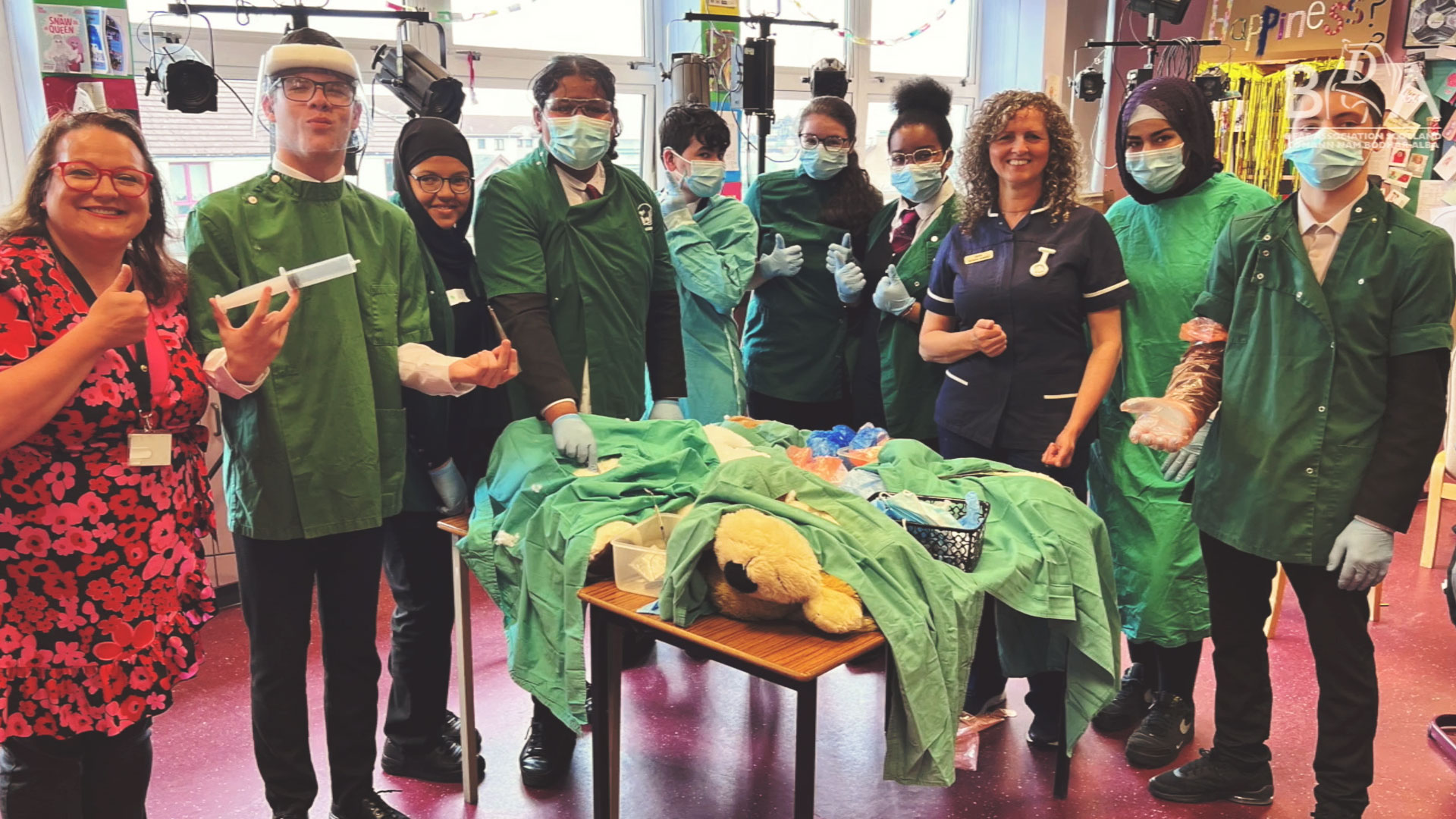
    DRP Scotland: Vet Workshops
    View Details

SEARCH ALL NEWS

NEWS CATEGORIES

All News
England
Northern Ireland
Scotland
Wales

RECENT NEWS

  • BDA-Youth-Skydive-square-web2
    Take the Leap for BDA Youth: Skydive Fundraiser 2026
  • 500px-10_Downing_Street._MOD_45155532-1134449270
    BDA responds to PM’s social care announcement
  • DB-Advisory-Group-feat-26-web
    Join our Deafblind Advisory Group
  • DeafMuseumLogo
    Join our Heritage Steering Group
  • 3YEARSTRAT-Feat-web
    BDA’s new 2026 – 2029 Strategy
British Deaf Association

British Deaf Association

The national voice of Deaf people in the UK. We campaign for equality, celebrate British Sign Language and support Deaf communities to thrive.

Contact us

We welcome your feedback and comments. Please feel free to get in touch.

  • bda@bda.org.uk
  • bda.org.uk

Training & Consultancy

For training and consultancy enquiries, please contact:

  • trainingandconsultancy@bda.org.uk

Useful links

  • Accessibility
  • Privacy Policy
  • Complaints Procedure
  • My Donations
  • Safeguarding
  • Anti-Slavery Policy

Stay updated

Keep up to date with BDA news, campaigns, opportunities and important updates.

Sign up for updates →
Registered with the Fundraising Regulator

© British Deaf Association 2026

Registered charity: England and Wales (1031687) and Scotland (SC042409)

Company No. 2881497 (England and Wales)

BDA Head Office

We welcome your feedback and comments. Please feel free to get in touch:

Email: bda@bda.org.uk

USEFUL LINKS

Accessibility
Privacy Policy
Complaints Procedure
My Donations
Safeguarding

Registered charity - England and Wales (1031687) and Scotland (SC042409) Company No: 2881497 (England and Wales) - Copyright British Deaf Association 2026

Important data protection update

Beacon CRM has informed the BDA about a cyber-security incident that may have involved personal information held in our account. Read our update, FAQs and BSL information.

Read the update → (opens in a new tab)